Designed software that improves employee experience and account security for 365 employees per semester.
summary
- Internal library software was not capable of handling accounts
- Software needed to be created to help create, change permissions on, and change passwords for accounts
- I designed this account management system from start to finish—research, design, prototyping, launch, and post-launch debugging
- This system now improves the library employee experience for 365 employees per semester while also increasing security
project requirements
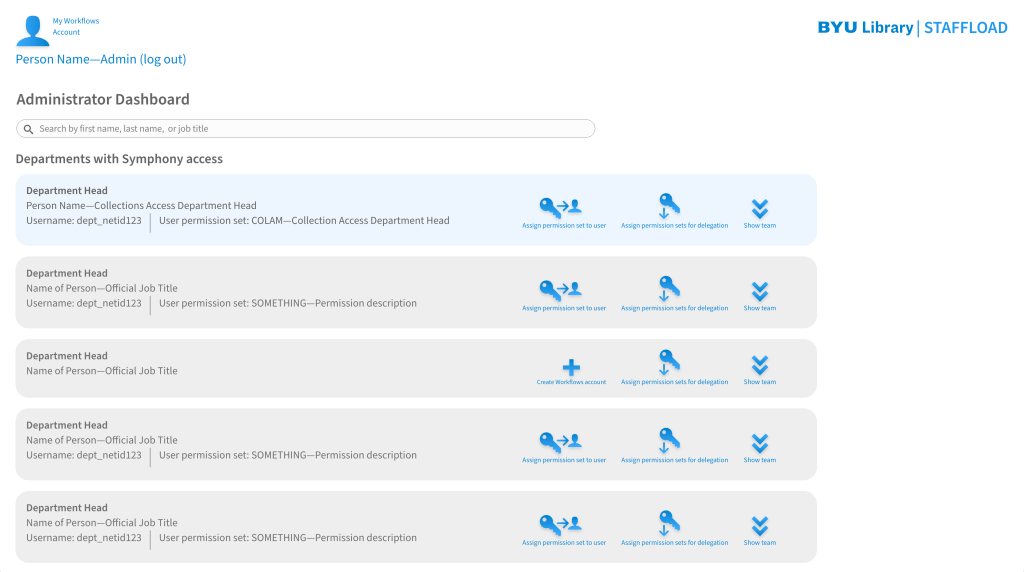
The BYU Library needed a solution to help with account management in its integrated library system (ILS). Passwords were shared between up to 30 employees, creating security and accountability risks. Since replacing the ILS was not feasible, the best solution was creating a system that would integrate with existing software to manage accounts.
Specifics:
- Since it is an internal app crucial to security, speed was more important than aesthetics
- Needed to facilitate granular permission changes
- Needed to be easily understood both by long-time employees and inexperienced employees
Design process
Iteration 1: Sketches shared with product teams

Method
- Sketches–generated many ideas and presented to design and product management teams
Feedback
- Contained too many features—speaking with product management helped narrow down possibilities
- More information needed—early sketches served as discussion pieces to help the BYU Library IT team narrow down what this system would look like and do
Iteration 2: Wireframes and sticky note session

Methods
- Divergent thinking–improved on previous sketches and created many new ideas to choose from
- Sticky note session–conducted ideation session with development and design teams to determine which ideas met the project requirements
Feedback
- Need an at-a-glance view—the interface needs to pack in as much information on the first screen as possible
- Avoid multiple screens—a work app with limited use should let users perform desired actions quickly
Iteration 3: detailed wireframe
Method
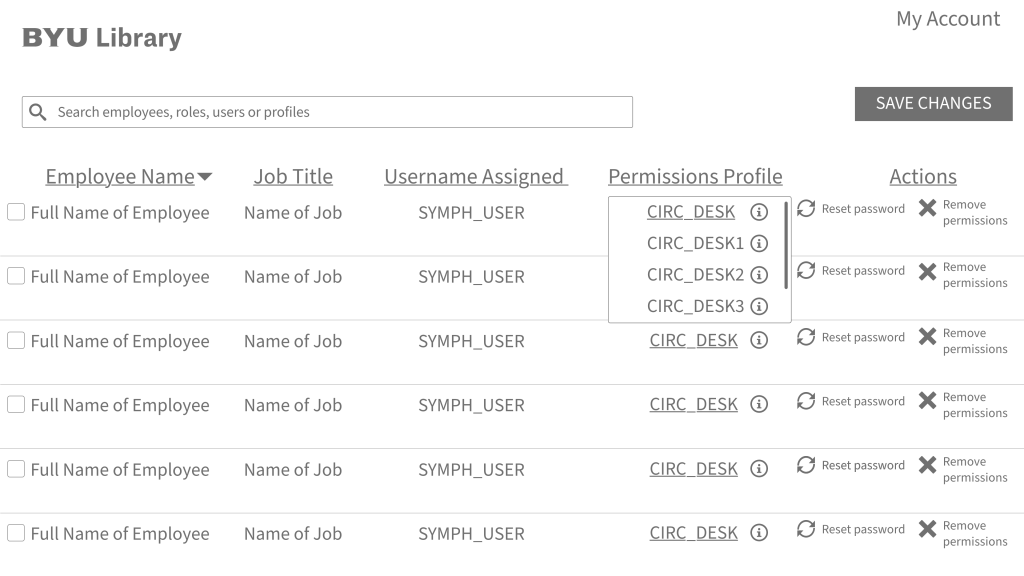
- Stakeholder interviews–showed wireframe to many library employees to gather feedback
Feedback
- Eliminate jargon—wireframe used jargon from the ILS (integrated library system) app, but many library employees did not understand this
- Improve clarity—stakeholders were not able to understand the basic functions of the app
- Generally liked—main elements of interface were good
Iteration 4: High-fidelity design and handoff
Method
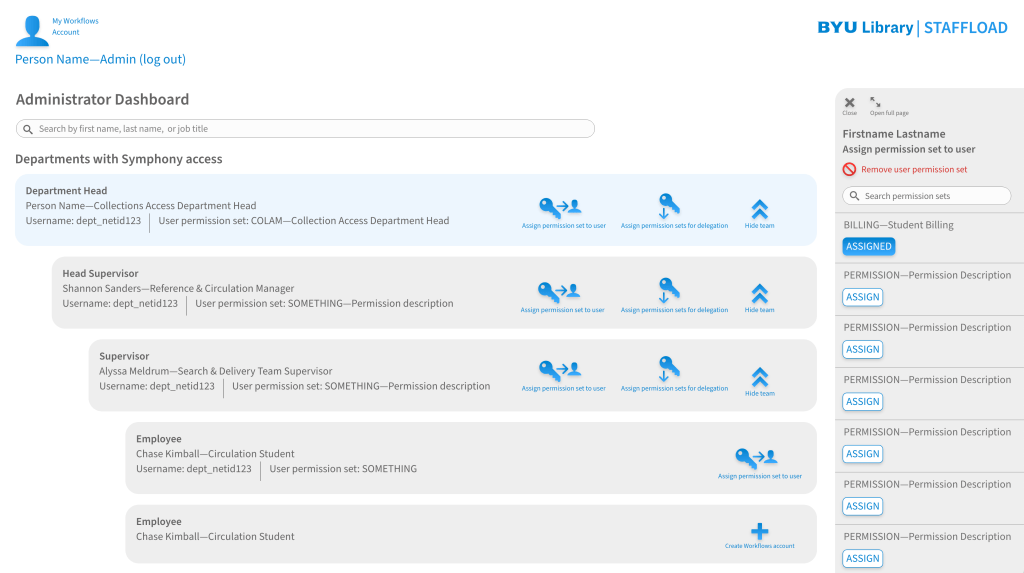
- Used data to define final prototype
- Implemented feedback about eliminating jargon
- Added new icons and labels to improve clarity based on employee feedback
- Implemented feedback from developers to show employee hierarchy in interface
Feedback
- Interface is elegant and intuitive
- App does exactly what it needs to for all levels of employees, with no extra features or visual clutter
Results
Through this project, 365 employees per semester have a smoother and more secure working experience. Although the system is still new, initial feedback has been overwhelmingly positive. Library supervisors are happy that security requirements were addressed and that they are able to easily grant and manage employee permissions. Complaints were minimal, indicating a frictionless experience that lets employees go about their jobs without worrying about learning a new interface.
 Chase Kimball